

Today, it can be challenging to navigate the wide range of certifications related to the safety and sustainability of textile products. Each certification focuses on something slightly different — some ensure environmental responsibility, others guarantee ethical working conditions or the safety of materials that come into contact with the skin. Together, however, they form an important tool for protecting consumers, the environment, and fair production.
Let’s take a closer look at some of the most significant certifications in the textile industry.
1. GOTS – Global Organic Textile Standard
GOTS is an internationally recognized standard for organic textile products.
It considers both ecological and social impacts throughout the entire production cycle, including:
-
the use of organic fibres
-
environmentally responsible dyeing and finishing
-
strict chemical control
-
fair and safe working conditions
Products certified by GOTS ensure they were created with respect for the planet and the people who made them.

2. Fair Trade Certified
Fair Trade guarantees that production takes place under socially just working conditions.
This certification ensures:
-
fair wages
-
no child or forced labor
-
safe and healthy workplaces
-
support for communities in developing countries
Fair Trade allows consumers to choose products that support sustainable development and improve the lives of producers.
3. Bluesign®
Bluesign® focuses on sustainability and the environmental footprint of textile production.
It evaluates:
-
water consumption
-
emissions
-
waste generation
-
chemical management
Products bearing the Bluesign® label meet strict requirements for ecological and human safety.
4. Cradle to Cradle Certified™
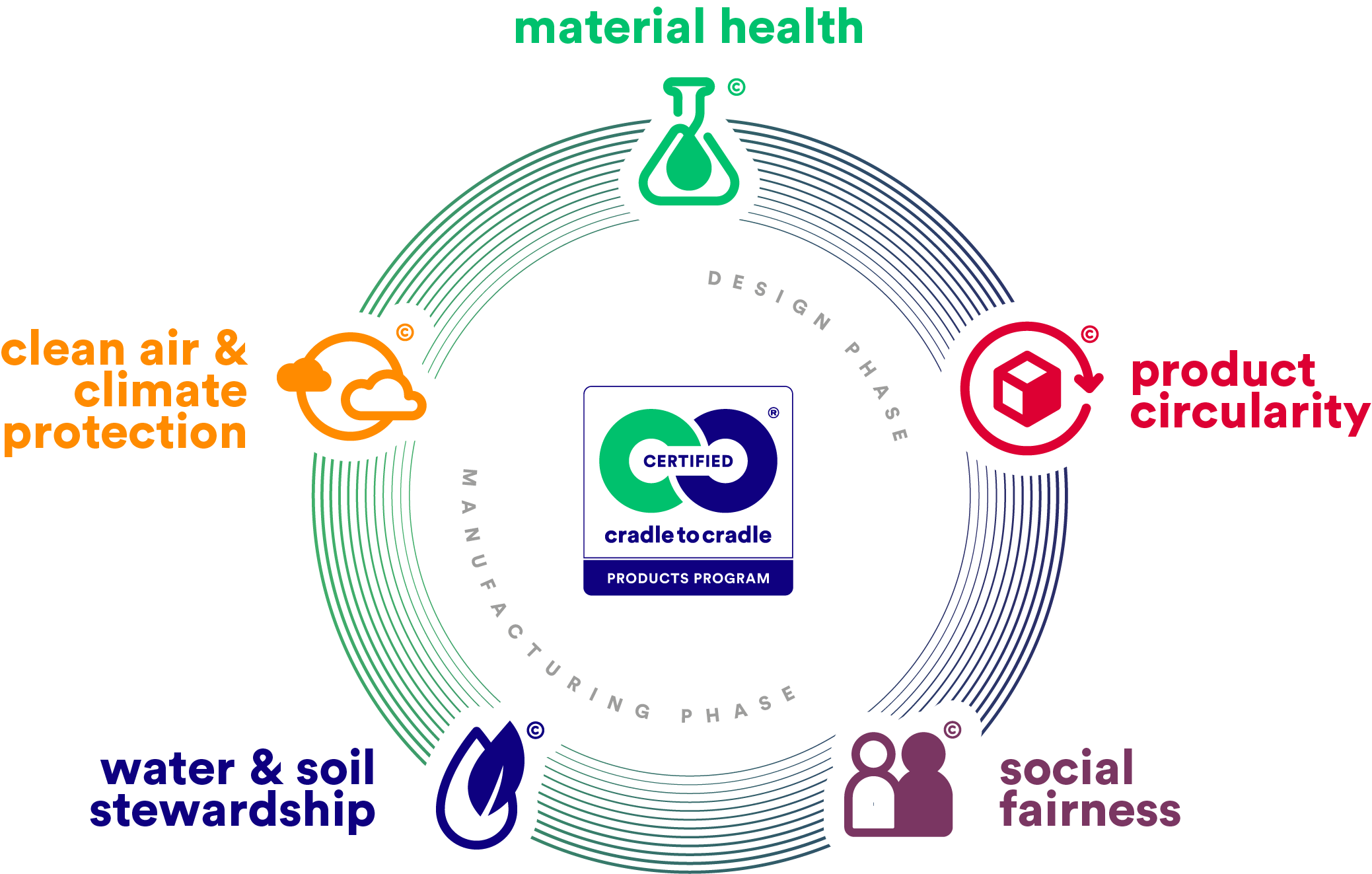
Cradle to Cradle assesses products based on how well they fit into the principles of the circular economy.
It evaluates:
-
material health and safety
-
recyclability or reusability
-
renewable energy and carbon management
-
social fairness in production
This certification supports the creation of products that leave no waste but instead become resources for new cycles.
5. SA8000
SA8000 is a global standard for social responsibility focusing on human and labor rights.
It addresses:
-
child and forced labor
-
workplace safety and hygiene
-
non-discrimination
-
freedom of association
-
fair working hours and wages
Products made under SA8000 standards guarantee ethical production conditions.
6. OEKO-TEX®
OEKO-TEX® is one of the best-known certifications for product safety and the absence of harmful substances in textiles.
It includes:
-
extensive testing for hundreds of regulated and unregulated chemicals
-
strict control throughout the supply chain
-
several certification levels (e.g., STANDARD 100, MADE IN GREEN, STeP)
OEKO-TEX® ensures not only safe textiles but also more environmentally responsible and socially fair production processes.
🌱 Why Do Certifications Matter?
Certifications serve as a reliable guide for consumers who wish to shop consciously, ethically, and sustainably. They help protect:
-
health — our skin absorbs more than we realize
-
nature — thanks to better chemical and waste management
-
human rights — through fair working conditions worldwide
The skin is the largest organ of our body. It’s not enough to watch what we eat — it’s just as important to be mindful of what we wear every single day.